
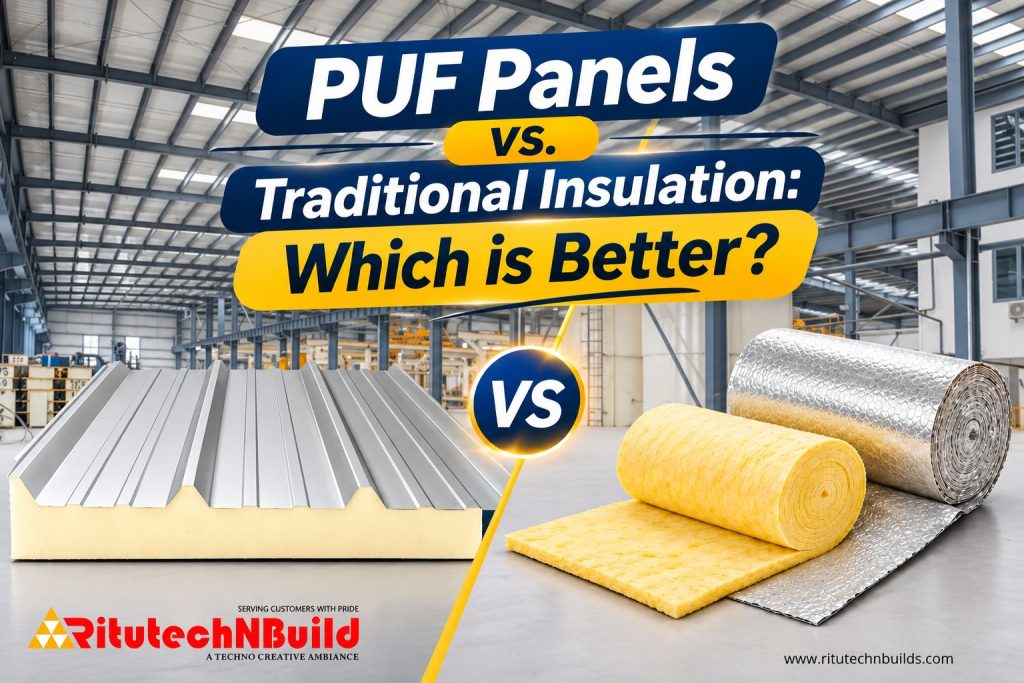
Insulation selection becomes a critical factor in achieving energy efficiency, regulating indoor temperature, and minimizing building maintenance costs. Nowadays, there is a wide range of insulation products available, among which PUF panels have gained increasing popularity because of their superior thermal insulation performance and faster installation process. But how does it compare with the traditional insulating materials such as glass wool, rockwool, and EPS?
It is important to understand all the differences with the assistance of Ritu Tech N Build company.
- Thermal Insulation: PUF Panels Offer Better Efficiency:
Thermal efficiency is one of the main considerations during the selection of insulating materials. The PUF (Polyurethane Foam) panels have a closed-cell construction to prevent heat flow and ensure steady indoor temperatures. Traditional insulating materials also provide heat resistance but depend on the density and thickness of the material.
- What makes PUF Panels Different:
- High thermal insulation with less thickness.
- Prevents heat gain and heat loss.
- Ensures a controlled temperature environment.
- Ideal for cold storage, industrial sheds, and commercial buildings.
- Energy Efficiency and Operational Cost:
Factories, warehouses, and cold storage areas require regular temperature regulation. The use of ineffective insulation increases the burden on air conditioners and refrigerators and leads to higher electricity usage.
The use of PUF panels as an insulator minimizes the passage of heat, thus assisting in proper energy management and reducing cost in the long term. Insulation is effective for energy efficiency; however, extra insulation may be needed to achieve good results.
- Installation Speed and Construction Convenience
The usual insulation methods consist of several stages of installation, which include insulation material installation, protection, and further finishing works.
On the other hand, the PUF sandwich panels consist of a layer of insulation material placed between two layers of protection materials.
Thus, the pre-assembly of the panels allows a quick installation of the material with reduced on-site construction processes.
- Durability and Moisture Resistance
The effect of moisture can influence the effectiveness of the insulation material and raise maintenance issues. PUF panels possess closed cells, which provide good moisture resistance if panels are correctly installed and sealed at the joints.
Standard fibrous insulations like glass wool and rock wool need to be protected from moisture to ensure proper insulation performance in humid environments. In the case of industrial and commercial buildings, panel installation is crucial.
PUF Panels vs. Traditional Insulation: Key Differences
| Comparison Factors | PUF Panels | Traditional Insulation |
| Thermal efficiency | High | Depends on material |
| Installation time | Generally faster | Often requires multiple steps |
| Thickness requirement | Relatively less | May require thicker layers |
| Moisture resistance | Good | Varies by material |
| Energy efficiency | Excellent potential | Application-dependent |
| Maintenance | Generally low | Depends on installation |
| Application | Industrial and commercial buildings | Residential and industrial applications |
Also Read:- What are Insulated Puff Panels? Explain its Uses and Advantages.
Where Are PUF Panels a Better Choice?
PUF insulated panels are ideal when temperature regulation, energy savings, and fast installation are top considerations.
Some typical uses are:
- Refrigeration Spaces: Assist in the maintenance of regulated temperature for the storage of food items.
- Warehouses: Prevent heat loss and create a comfortable internal environment.
- Processing Plants: Ensure temperature-regulated manufacturing spaces.
- Pharmaceutical Companies: Assist in maintaining required environmental conditions.
- Commercial Properties: Enhance the insulation of commercial buildings.
Yet the ultimate choice should also take into account fire performance, panel thickness, facing material, structure, and specifications of the project.
Conclusion:
The PU foam panels prove to be an effective choice of insulation material, along with ease of installation and operational advantages for modern industrial and commercial construction work. Proper selection of specifications and installation is also important to achieve the desired results.
Ritu Tech n Builds Construction provides building solutions in order to construct efficient and durable structures. Suitable selection of insulation materials can assist businesses in improving the efficiency of buildings.
Frequently Asked Questions:
- Why are PUF panels superior to the usual insulation?
Because they provide excellent insulation, are relatively thinner, and are easier to install.
- Can PUF panels be used in industrial buildings?
Yes. PUF panels are widely used in various industrial constructions such as factories, warehouses, cold storage, and others.
- Does the use of PUF panels save energy?
Yes. It helps to minimize heat transfer, which may help to decrease energy consumption.
- What should be the thickness of the PUF panels for construction?
It depends on the type of construction, needed insulation characteristics, temperature, etc.
- Is it a reasonable decision to use PUF panels for construction from the financial perspective?
Yes. Because of their insulation performance, easy installation, and energy savings possibility, it can be a good investment choice.
Also Read:- Top 8 Benefits of PUF Insulated Roof and Wall Panels